2016年7月21日木曜日
Question 14
Are there any concrete examples of zoo breeding being an asset?
One of the most important reasons why zoos are important is because they support international breeding programs, particularly for endangered species. In the wild, some of the rarest animals can have difficulty in surviving because of the lack of their mates or habitats. They also are in danger from poachers and predators. A good zoo which have advanced equipment and land can enable these species to live in a secure environment. But also there is the problem that a vast majority of captive breeding programs do not release animals back to the wild. And surplus animals are sold to other zoos, or circuses, and even killed. This is something that must be stopped and prevented. How well the zoos are managed will be a big issue and what will lead to convincing people who are against animal captivity.
British Council http://learnenglishteens.britishcouncil.org/skills/reading-skills-practice/are-zoos-good-thing

Question 13
What are zoos doing in order to fight ideas of animal captivity?
People who are for the idea say that zoos are safer. For example, zoo animals are living in enclosures that are close to their natural habitats as possible. Also when a zoo wants to obtain a new animal, there are strict procedures and rules in order to do so, so zoos with sloppy rules do not have a chance to get them. Also, breeding programs are especially focusing on animals that are in danger, and though they are in captivity, the animals have a much larger chance to survive than in the wild where there are many dangers. Another big benefit of animal captivity is that scientists can make research on animal much closer at hand. These acts may lead to how we can help endangered animals survive in the wild, too.
animals in captivity pros an cons http://nyln.org/animals-in-captivity-pros-and-cons-list
Question 12
What are the main ideas of people who are for/against animal captivity?
I will answer from the point of view of people who are for animal captivity, or rather animal protection. This also is a delicate question, and may cause arguments but by breeding and protecting animals in danger, we can save them from extinction. What we really should be aware of is the environment. Us human beings have destroyed and mutilated many habitats of animals in the wild and led them to extinction. Is it not our duty to save and protect them? But people who are against animal captivity say it is cruel to keep animals in small cages and make their lifespan a short one. But I think such problems can be solved by our efforts and co-operations. Mankind should be responsible for what they did to the earth.
Occupy Theory http://occupytheory.org/list-of-pros-and-cons-of-zoos/
Question 11
Which countries people are especially against animal captivity?
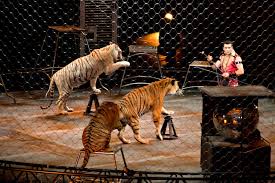
Again, I couldn't find exact information on the topic, but instead, I made a research on which countries have best/worst records on banning animals from circuses. The countries which made a nation wide ban on all animals in circuses were Cyprus, Greece, Malta, and Bolivia. France was not anywhere on the list! The UK is often cited as a leader on animal welfare, but the UK only had local bans one the use of animals in circuses, and nowhere near nationwide bans.
Again, I couldn't find exact information on the topic, but instead, I made a research on which countries have best/worst records on banning animals from circuses. The countries which made a nation wide ban on all animals in circuses were Cyprus, Greece, Malta, and Bolivia. France was not anywhere on the list! The UK is often cited as a leader on animal welfare, but the UK only had local bans one the use of animals in circuses, and nowhere near nationwide bans.
http://www.ifaw.org/international/news/which-countries-have-bestworst-records-banning-animals-circuses
Question 10
What is the average lifespan of animals in captivity and ones which are not?
I will make elephants as an example, and to make matters simple I will just say the results. Elephants that live in the wild live up to 60 to 70 years. On the other hand, elephants in captivity often die before the age of 40. Elephants are some of the world's most intelligent mammals, and they need close contact with other elephants and exercise for their health and well being. In the wild they make herds of up to 100 or more elephants, but in zoos they are usually kept alone or in units of two or three. Breeding programs of elephants have proved unsuccessful, with many calves dying prematurely because of health problems such as tuberculosis and other major diseases.
One Green Planet http://www.onegreenplanet.org/animalsandnature/the-life-of-animals-in-captivity-versus-the-wild/
Question 9
Are there any ideas for keeping animals and not making them tame at the same time?
I wrote this for zoos which have the ambition of letting the animals they bred back into the wild. This is a difficult problem, because animals which are taken care of by humans tend to be lazy, and do not want to leave the safe cages and protection of human beings. I remembered watching a film about a lion called Elsa, and remembered how hard Elsa's owner tried to let her back into the wild. There are many other movements where they try to let animals people bred into the wild, but it is not an easy task. I think the closest way of doing so is to breed them in wide spaces where animals can feel comfortable as if they are in the wild, and then let them out when they are ready to take on the wild.

Elsa The Lioness http://www.fatheroflions.org/Elsa.html
Question 8
What was the first animal which was first led to extinction by mankind?
I couldn't find the exact date and specimen of what animal was led to extinction by mankind, but I will write about a famous animal which was definitely led to extinction by men at an early stage. An extinct flightless bird that inhabited the island of Mauritius, the Dodo was about one meter tall and may have weighed 10–18 kg. he last widely accepted sighting of a Dodo was in 1662. This Animal was not built for defending itself against predators. It also only lays one egg a year, and slow at reproducing. When mankind arrived and brought monkeys, rats and pigs with them, it was too much for the dodos. They were wiped out from this world by 1681.
10 Awesome animals That Were Hunted To Extinction By Humans Before You Were Born
http://www.iflscience.com/plants-and-animals/animals-have-been-brought-extinction-human-hands/
登録:
投稿 (Atom)